
UI / UX Design
ART 448 is an advanced studio-seminar focused on user interface and user experience design for web-based products and applications. Grounded in cognitive psychology and behavioral science, the course draws on the Laws of UX framework to examine how perception, attention, memory, and decision-making influence user interaction. Students apply these principles using Figma as the primary design environment, developing research-informed interfaces for websites, web apps, and—when appropriate—broader SaaS-style systems. Emphasis is placed on structured UX thinking, including problem framing, interaction modeling, usability evaluation, and interface iteration. Students are expected to justify design decisions through psychological and user-centered rationale, producing portfolio-ready work that prepares them for advanced professional practice and subsequent portfolio development courses.
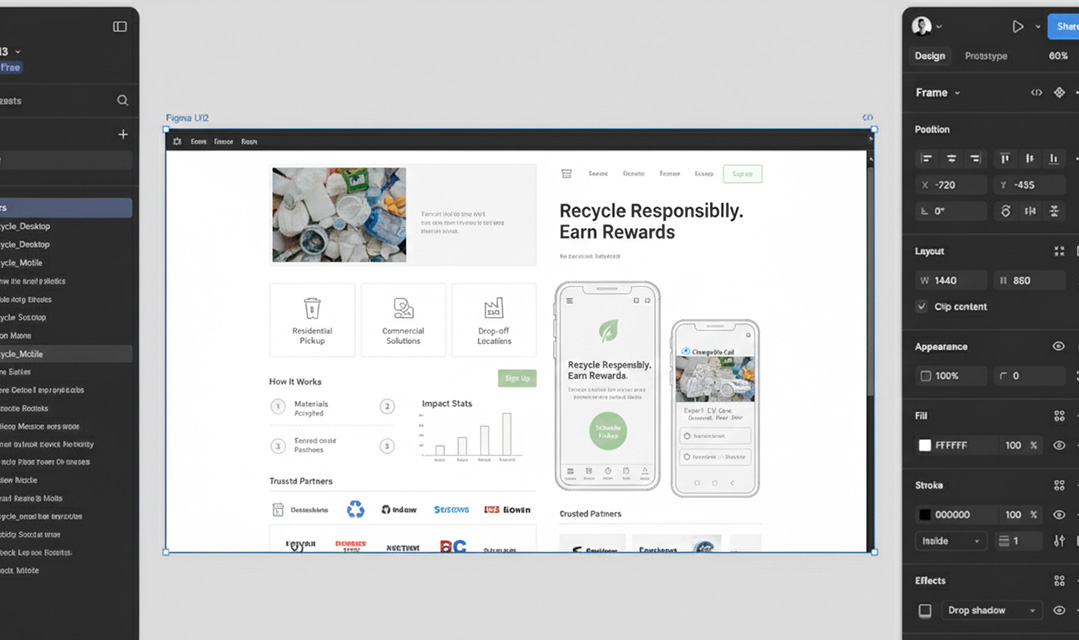
Course Details
Course type
Lecture / Hybrid
Level
Senior
Institution
Charleston Southern University
Fall 2017-2022
Duration
3 Hours
Contribution
Curriculum Designer & Instructor
Learning Outcomes
Employer Highlights
This course produces portfolio-ready UX work that maps directly to entry-level industry expectations: applying proven UX psychology to make clear interface decisions, building readable hierarchies and navigation systems, designing effective calls-to-action and feedback states, and creating accessible, inclusive experiences. Employers value candidates who can justify choices with user-centered reasoning (not taste), test and iterate based on evidence, and communicate their process through coherent case studies—skills emphasized throughout the modules and reflected in final portfolio deliverables.
Project Samples
Project Walkthrough in 3 Steps. See Assignment Sample under Course Assets.
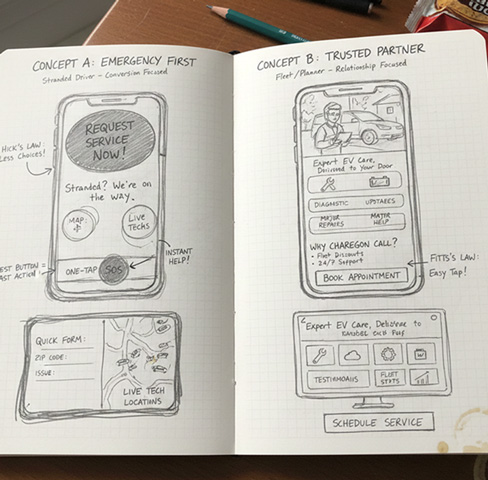
Step 1: Student Sketchbook Sample
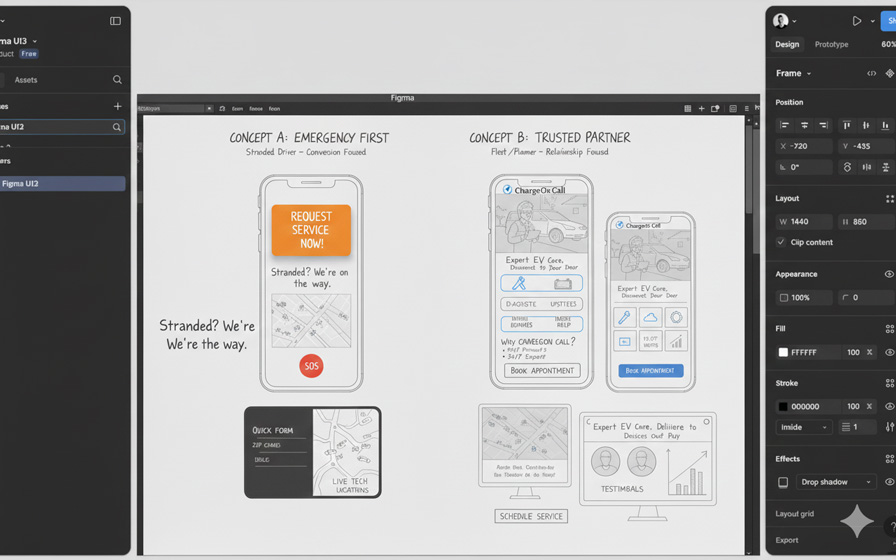
Step 2: Figma sketchbook scan and rendering
Bringing the sketches into Figma

Step 3: UI / UX finished piece
AI Project Integration
AI tools are integrated into the course as analytical and reflective aids rather than generative substitutes for design work. Students may use AI to interrogate assumptions, simulate user perspectives, or critique interface decisions, but all design solutions must be grounded in documented research, usability testing, and psychological justification. Assignments are structured so that AI can support questioning and evaluation, while final interface decisions, rationale, and iteration remain demonstrably human-driven.
See articles on AI Integration in the classroom:
Course Assets
Prerequisites
Must have completed Web I, Web II, Print Design, Photoshop and Illustrator courses.