
Research & Curriculum Interests
My research investigates AI's role in graphic design education as a collaborative tool that enhances, rather than undermines, learning by promoting critical thinking and ethical integration. When used properly, AI supports ideation and iteration, allowing students to evaluate and refine outputs while deepening their understanding of design principles. Practical examples include prompts for concept generation, feedback loops, ethical mood boards, and comparative logo analysis, each requiring students to critique and build upon AI suggestions manually. This approach prepares future designers for an AI-integrated industry while maintaining academic integrity. Please review some of my sample projects to see how LLMs can be used to enhance classroom instruction without circumventing the need for genuine effort.
New AI Assessment Category
The New Efficiency Metric: Redefining AI Assessment in Design Education For decades, the "quality" of a graphic designer was measured almost exclusively by the final artifact—the sleek logo, the balanced layout, or the evocative color palette. However, as Artificial...
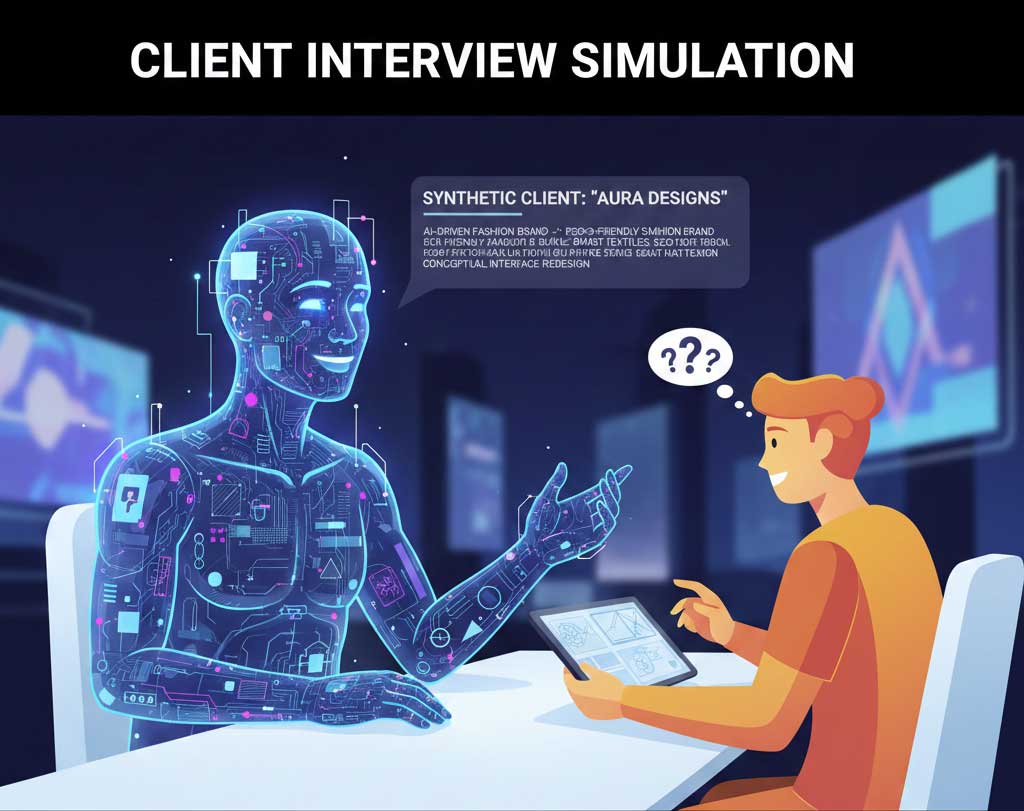
AI Integration: Making a Synthetic Client
One of the hardest skills to teach in graphic design education is not software, aesthetics, or production. It is client discovery—the ability to ask the right questions before deciding what to design. Students are often eager to jump straight to solutions. In...

AI Integration: Teaching Critical Thinking
One of the most persistent challenges in graphic design education is teaching students how to think critically about information, not just how to visualize it. As design problems increasingly intersect with complex industries—and as AI tools confidently generate...

AI Integration: Teaching Adobe Illustrator
AI doesn't have to circumvent learning, it can compliment it. Here's a good sample project introducing Adobe Illustrator that can't be easily done by dumping a prompt into a AI tool. The "exploded" Technical Schematic Duration: 2 Weeks Software: Adobe Illustrator Core...

Overlooked Super Power 1 – Hosting Literacy When Teaching Web Design and App Development.
Web design education often prioritizes visual systems, interaction patterns, and user experience. These are essential skills. Yet beneath every successful website lies an invisible layer that is rarely addressed in design curricula: hosting infrastructure. My...
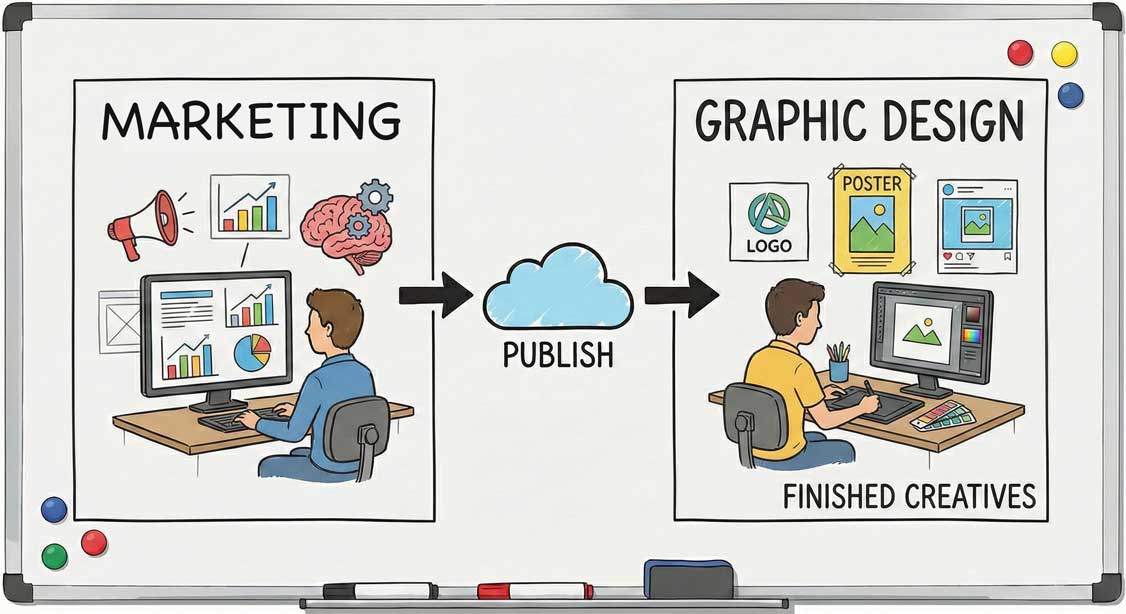
Overlooked Superpower 2 – Marketing Literacy When Teaching Graphic Design
Graphic design education often emphasizes form, aesthetics, and conceptual development. These skills are essential. However, in professional practice, design decisions rarely exist in isolation. They are most often shaped - and funded - by marketing objectives. One of...

Overlooked Superpower 3 – Sales Literacy When Teaching Graphic Design
Graphic design education traditionally emphasizes creative development, technical proficiency, and visual communication. These skills are essential. However, many design careers falter not because of a lack of talent, but because designers struggle to articulate...